Grantees of offices, commissions and pardons
(1317-1321)
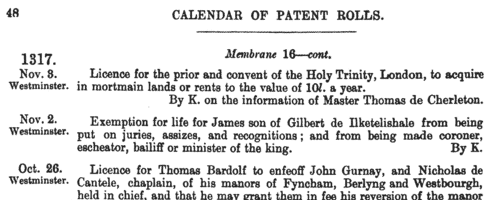
The Patent Rolls are the Chancery enrolments of royal letters patent. Those for the 11th to the 14th years of the reign of king Edward II (8 July 1317 to 7 July 1321) were edited for the Public Record Office by G. F. Handcock, and published in 1903. The main contents are royal commissions and grants; ratifications of ecclesiastical estates; writs of aid to royal servants and purveyors; and pardons. Most extensive are the commissions of oyer and terminer to justices to investigate complaints about specific crimes and wrongs in particular counties.LOVERING. Cost: £2.00.  | Sample scan, click to enlarge
|
Clergy, the religious and the faithful in Britain and Ireland
(1305-1342)
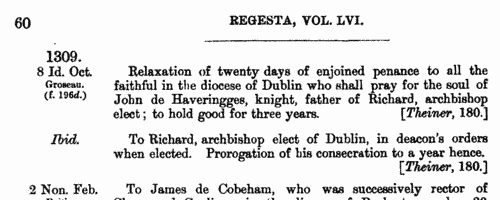
These are abstracts of the entries relating to Great Britain and Ireland from the Regesta of popes Clement V, John XXII and Benedict XII. Many of these entries relate to clerical appointments and disputes, but there are also indults to devout laymen and women for portable altars, remission of sins, &c. This source is particularly valuable for Ireland, for which many of the key government records of this period are lost. Clement V was consecrated and crowned 14 November 1305 (the day from which his pontificate is dated); John XXII was crowned 5 September 1316; Benedict XII 8 January 1335 and died 25 April 1342. From 1309 onwards the papacy was in exile at Avignon. The extracts were made by W. H. Bliss from Regesta lii to cxxxvi, and published in 1895. Bliss remarked that 'although the writing of the Papal Registers of the 14th century is clearer than that of many contemporary English MSS., the entries in them were for the most part founded upon petitions or letters from different countries, and the scribes in the Papal Chancery must have experienced even greater difficulty in copying English proper names than English students experience nowadays in reading the early Chancery Rolls preserved in the Public Record Office. Not having local or personal knowledge, they constantly misread doubtful letters.'LOVERING. Cost: £4.00. | Sample scan, click to enlarge
|
Clerks and Clergy in Herefordshire, Shropshire and Gloucestershire
(1344-1360)
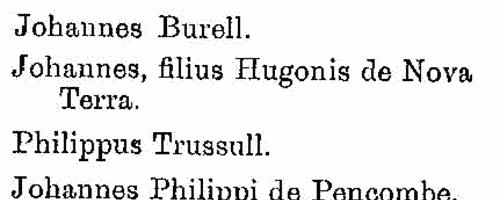
The register of bishop John de Trillek of Hereford, containing general diocesan business, but also including ordination lists for monks and clergy. Only a small proportion of the clerks went on to acquire benefices and remained celibate. Hereford diocese covered almost all Herefordshire, southern rural Shropshire, a westward arm of Worcestershire, and a northwestern slice of Gloucestershire.LOVERING. Cost: £6.00. | Sample scan, click to enlarge
|
Householders of Woodbury, Devon
(1536)
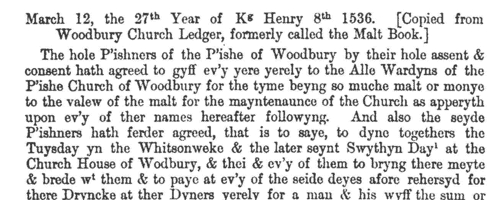
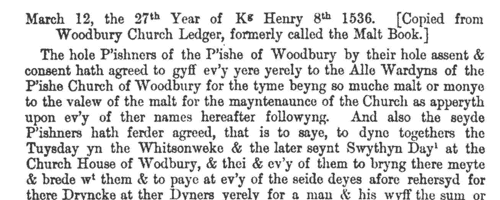
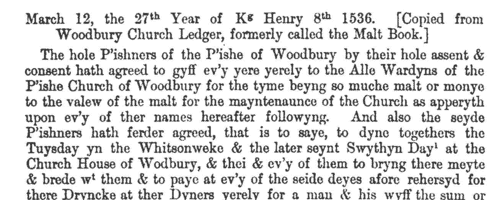
The Woodbury Church Ledger or Malt Book contained assessments of householders in the parish, arranged district by district, for the levy of the malt rate. This is the return for 12 March 1536.LOVERING. Cost: £6.00. | Sample scan, click to enlarge
|
Householders of Woodbury, Devon
(1591)
The Woodbury Church Ledger or Malt Book contained assessments of householders in the parish, arranged district by district, for the levy of the malt rate. This is the return for 28 June 1591.LOVERING. Cost: £6.00. | Sample scan, click to enlarge
|
Official Papers
(1627-1628)
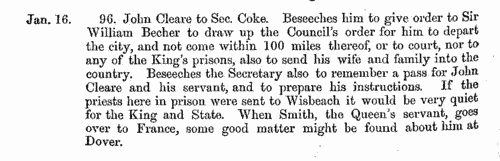
The State Papers Domestic cover all manner of business relating to Britain, Ireland and the colonies, conducted in the office of the Secretary of State as well as other miscellaneous records.
LOVERING. Cost: £4.00. | Sample scan, click to enlarge
|
British in the East
(1625-1629)
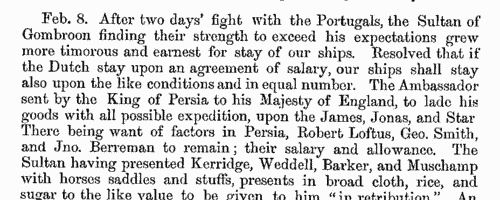
The East India State Papers centre on the records of the East India Company, trading to India, the East Indies, Persia and China. They include the Court Minutes of the East India Company.LOVERING. Cost: £4.00. | Sample scan, click to enlarge
|
Householders of Woodbury, Devon
(1631)
The Woodbury Church Ledger or Malt Book contained assessments of householders in the parish, arranged district by district, for the levy of the malt rate. This is the return for 23 May 1631.LOVERING. Cost: £6.00. | Sample scan, click to enlarge
|
PCC Probate Abstracts
(1630-1634)
The Prerogative Court of Canterbury's main jurisdiction was central and southern England and Wales, as well as over sailors &c dying abroad: these brief abstracts usually give address, date of probate and name of executor or administrator
LOVERING. Cost: £2.00. | Sample scan, click to enlarge

|
Official Papers
(1644)
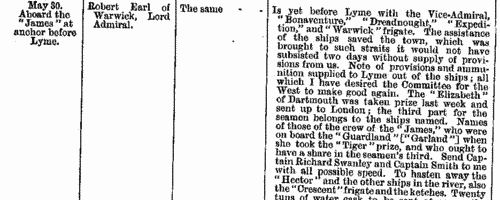
The State Papers Domestic cover all manner of business relating to Britain, Ireland and the colonies, as well as other miscellaneous records. These records are from January to September 1644: there is also a set of abstracts of navy correspondence.
LOVERING. Cost: £4.00. | Sample scan, click to enlarge
|
Research your ancestry, family history, genealogy and one-name study by direct access to original records and archives indexed by surname.