Ace Surname Ancestry ResultsOur indexes 1000-1999 include entries for the spelling 'ace'. In the period you have requested, we have the following 52 records (displaying 1 to 10): Single Surname Subscription | | | Buying all 52 results of this search individually would cost £274.00. But you can have free access to all 52 records for a year, to view, to save and print, for £100. Save £174.00. More... |
These sample scans are from the original record. You will get scans of the full pages or articles where the surname you searched for has been found. Your web browser may prevent the sample windows from opening; in this case please change your browser settings to allow pop-up windows from this site. Curia Regis Rolls
(1196-1201)
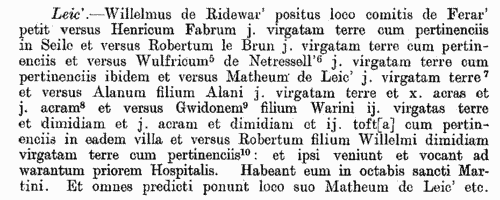
The Curia Regis, king's court, of mediaeval England took cases from throughout the country, and its records are among the most important surviving from this early period.ACE. Cost: £4.00.  | Sample scan, click to enlarge
| Oblata or Fine Rolls
(1200-1216)
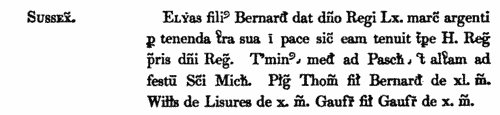
All the surviving oblata or fine rolls of the reign of king John were edited by Thomas Duffus Hardy and printed by the Commissioners of the Public Records in 1835. These are the oblata rolls of the 1st, 2nd and 3rd years of the reign, and the fine rolls of the 6th, 7th, 9th, 15th, 16th and 17th years. These rolls contain notices of the oblations or fines offered to the Crown to procure grants and confirmations of liberties and franchises of markets, fairs, parks and free warren; for exemption from tolls, pontage, passage and murage; to obtain justice and right; to stop, delay or expedite pleas, trials and judgments; and to remove suits and processes from inferior tribunals into the King's Court. Fines were also extracted for licence to trade, or permission to exercise commerce or industry of any kind, and to have the aid, protection, or goodwill of the King; to mitigate his anger or abate his displeasure; to be exempted from knighthood either for a term or for ever, and from attending the King in his foreign expeditions; they were also demanded for seisin or restitution of ancestral lands or chattels; for allowing delinquents to be replevied or bailed; for acquittal of murder; and for pardon of trespasses and misdemeanours; for the 'year and a day' of the lands and goods of felons and fugitives. Almost all entries have the county in question indicated in the left hand margin.ACE. Cost: £4.00. | Sample scan, click to enlarge
| Close Rolls (1234-1237)
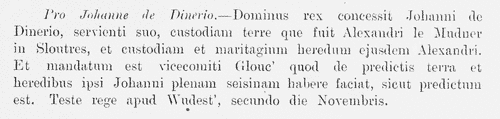
The close rolls of the 19th to 21st years of the reign of king Henry III, that is from 28 October 1234 to 27 October 1237, record the main artery of government administration in England, the orders sent out day by day to individual officers, especially sheriffs of shires: they are an exceptionally rich source for so early a period. Most of the contents relate to England, but there are also entries concerning Wales, Scotland, Ireland and the English possessions in France. This calendar was prepared by staff of the Public Record Office and published in 1908. Latin.
ACE. Cost: £6.00. | Sample scan, click to enlarge
| Pipe Roll
(1241-1242)
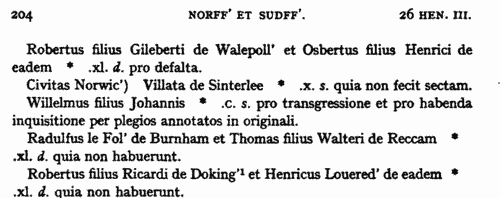
The Great Rolls of the Pipe are the central record of the crown compiling returns of income and expenditure from the sheriffs and farmers of the various English counties or shires. This is the oldest series of public records, and the earliest surviving instances of many surnames are found in the Pipe Rolls. This is the roll for the 26th year of the reign of king Henry III, that is, accounting for the year from Michaelmas 1241 to Michaelmas 1242. Most (but not all) of the entries in which names appear relate to payments for grants of land and fines or pardons arising from the proceedings of the justices. The text was edited by Henry Lewin Cannon for Yale Historical Publications and printed in 1918. The name of the county is given at the head of each page, and variant spellings, omissions and additions found in the duplicate Chancellor's Roll [C. R.] are given in the footnotes.ACE. Cost: £4.00. | Sample scan, click to enlarge
| Liberate Rolls
(1240-1245)
These chancery liberate rolls of the 25th to 29th years of the reign of Henry III of England record the details of payments and allowances as part of the administration of government. Most entries start with the Latin words 'liberate', meaning 'deliver', or 'allocate', meaning allow. There are also 'contrabreves', warrants mainly to sheriffs of shires, assigning them tasks and allowing expenses. Most of the entries relate to England and Wales, but there are occasional references to Ireland and the English possessions in France.ACE. Cost: £4.00. | Sample scan, click to enlarge

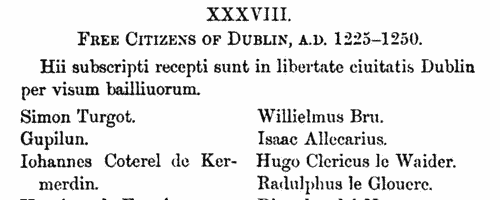
| Dublin Merchants
(1256)
In 1870 documents of the Anglo-Normans in Ireland from 1172 to 1320, edited by J. T. Gilbert, Secretary of the Public Record Office of Ireland, were printed in the Rerum Britannicarum Medii Aevi Scriptores series. These include transcripts of the Dublin guild merchant rolls surviving from that period, which we have now indexed. ACE. Cost: £6.00. | Sample scan, click to enlarge
| Fine Rolls
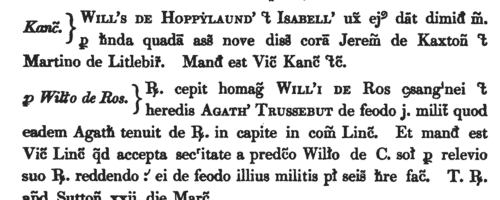
(1246-1272)
The fine rolls of the 31st to 57th years of the reign of king Henry III record part of the government administration in England. These excerpts from the rolls list in transcript applications by plaintiffs for various writs (such as 'ad terminum' and 'pone') and for assizes to be held by the justices in eyre to look into their grievances. A fine of half a mark (6s 8d) or a mark (13s 4d) was usually levied; the cases are normally identified by county, and record that the appropriate sheriff had been notified. There are also more extensive records, in which more detail is given. The excerpts were made by the Record Commission and printed in 1836.ACE. Cost: £4.00. | Sample scan, click to enlarge
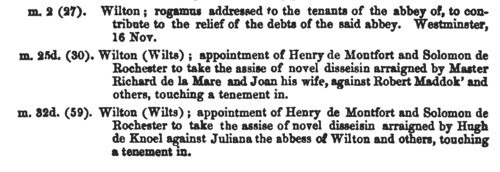
| Patent Rolls: entries for Gloucestershire
(1275-1276)
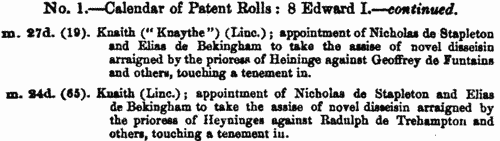
Calendars of the patent rolls of the reign of king Edward I are printed in the Calendars of State Papers: but these cover only a fraction of the material on the rolls. From 1881 to 1889 the reports of the Deputy Keeper of the Public Record Office also include calendars of other material from the rolls - about five times as many entries as in the State Papers - predominantly mandates to the royal justices to hold sessions of oyer and terminer to resolve cases arising locally; but also other general business. The calendar for the 4th year of king Edward I [20 November 1275 to 19 November 1276], hitherto unindexed, is covered here.ACE. Cost: £6.00. | Sample scan, click to enlarge
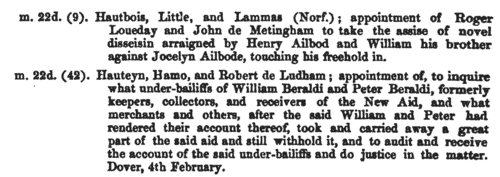
| Patent Rolls: entries for Hampshire
(1277-1278)
Calendars of the patent rolls of the reign of king Edward I are printed in the Calendars of State Papers: but these cover only a fraction of the material on the rolls. From 1881 to 1889 the reports of the Deputy Keeper of the Public Record Office also include calendars of other material from the rolls - about five times as many entries as in the State Papers - predominantly mandates to the royal justices to hold sessions of oyer and terminer to resolve cases arising locally; but also other general business. The calendar for the 6th year of king Edward I [20 November 1277 to 19 November 1278], hitherto unindexed, is covered here.ACE. Cost: £6.00. | Sample scan, click to enlarge
| Patent Rolls: entries for Middlesex
(1279-1280)
Calendars of the patent rolls of the reign of king Edward I are printed in the Calendars of State Papers: but these cover only a fraction of the material on the rolls. From 1881 to 1889 the reports of the Deputy Keeper of the Public Record Office also include calendars of other material from the rolls - about five times as many entries as in the State Papers - predominantly mandates to the royal justices to hold sessions of oyer and terminer to resolve cases arising locally; but also other general business. The calendar for the 8th year of king Edward I [20 November 1279 to 19 November 1280], hitherto unindexed, is covered here.ACE. Cost: £6.00. | Sample scan, click to enlarge
|
Research your ancestry, family history, genealogy and one-name study by direct access to original records and archives indexed by surname.
|