Buc Surname Ancestry ResultsOur indexes 1000-1999 include entries for the spelling 'buc'. In the period you have requested, we have the following 11 records (displaying 1 to 10): Buy all | | | Get all 11 records to view, to save and print for £50.00 |
These sample scans are from the original record. You will get scans of the full pages or articles where the surname you searched for has been found. Your web browser may prevent the sample windows from opening; in this case please change your browser settings to allow pop-up windows from this site. Liberate Rolls
(1200-1211)
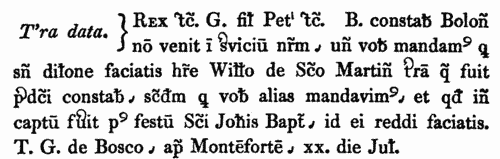
The chancery liberate rolls of the 2nd, 3rd and 5th years of the reign of king John (who came to the throne 27 May 1199) record the details of payments and allowances issued out of the Court of Chancery under the Great Seal of England, and were directed to the Treasurer. The rolls were edited by Thomas Duffus Hardy and printed by the Record Commission in 1844. Included in the volume is a transcript of a Praestita Roll (on which were entered the sums of money which issued out of the treasuries by way of imprest, advance or accommodation) of the 12th year of king John and a Misae Roll (detailing the daily expenses of his court) of the 11th year. Most of the entries relate to England and Wales, but there are occasional references to Ireland and the English possessions in France.BUC. Cost: £4.00.  | Sample scan, click to enlarge
| Curia Regis Rolls
(1210-1212)
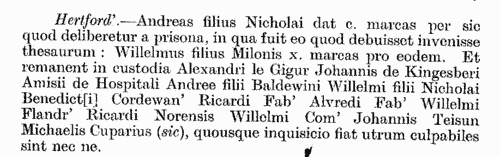
The Curia Regis, king's court, of mediaeval England took cases from throughout the country, and its records are among the most important surviving from this early period.BUC. Cost: £4.00. | Sample scan, click to enlarge
| Oblata or Fine Rolls
(1200-1216)
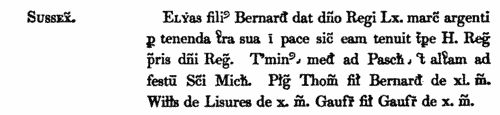
All the surviving oblata or fine rolls of the reign of king John were edited by Thomas Duffus Hardy and printed by the Commissioners of the Public Records in 1835. These are the oblata rolls of the 1st, 2nd and 3rd years of the reign, and the fine rolls of the 6th, 7th, 9th, 15th, 16th and 17th years. These rolls contain notices of the oblations or fines offered to the Crown to procure grants and confirmations of liberties and franchises of markets, fairs, parks and free warren; for exemption from tolls, pontage, passage and murage; to obtain justice and right; to stop, delay or expedite pleas, trials and judgments; and to remove suits and processes from inferior tribunals into the King's Court. Fines were also extracted for licence to trade, or permission to exercise commerce or industry of any kind, and to have the aid, protection, or goodwill of the King; to mitigate his anger or abate his displeasure; to be exempted from knighthood either for a term or for ever, and from attending the King in his foreign expeditions; they were also demanded for seisin or restitution of ancestral lands or chattels; for allowing delinquents to be replevied or bailed; for acquittal of murder; and for pardon of trespasses and misdemeanours; for the 'year and a day' of the lands and goods of felons and fugitives. Almost all entries have the county in question indicated in the left hand margin.BUC. Cost: £4.00. | Sample scan, click to enlarge
| Fine Rolls
(1216-1246)
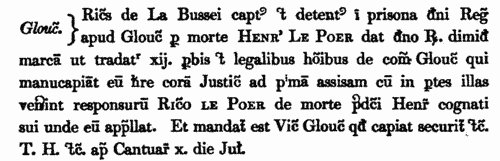
The fine rolls of the 1st to 30th years of the reign of king Henry III record part of the government administration in England. These excerpts from the rolls list in transcript applications by plaintiffs for various writs (such as 'ad terminum' and 'pone') and for assizes to be held by the justices in eyre to look into their grievances. A fine of half a mark (6s 8d) or a mark (13s 4d) was usually levied; the cases are normally identified by county, and record that the appropriate sheriff had been notified. There are also more extensive records, in which more detail is given. The excerpts were made by the Record Commission and printed in 1835.BUC. Cost: £4.00. | Sample scan, click to enlarge
| Pleas of the Forest in Huntingdonshire
(1255)
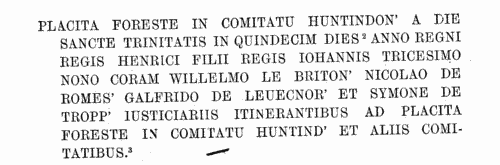
Pleas of the forest in the county of Huntingdon, heard in the quindene of Holy Trinity in the 39th year of the reign of king Henry III, 6 June 1255, recorded in Public Record Office Forest Proceedings, Treasury of Receipt, No. 41, Roll 6, were selected, transcribed (the Latin extended) and translated by G. J. Turner and published by the Selden Society in 1901. The text and translation are printed on facing pages.BUC. Cost: £4.00. | Sample scan, click to enlarge
| Norfolk Feet of Fines
(1196-1307)
Pedes Finium - law suits, or pretended suits, putting on record the ownership of land in Norfolk. These abstracts were prepared by Walter Rye.BUC. Cost: £4.00. | Sample scan, click to enlarge

| Charter Rolls
(1050-1326)
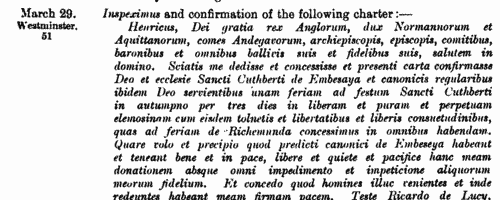
This abstract of the surviving charter rolls for 1300 to 1326, in the reigns of kings Edward I and II, was prepared by C. G. Crump and A. E. Stamp and published in 1908. The charter rolls not only recorded royal grants of lands, liberties and offices, but also enabled landowners to have their existing charters, their deeds of title, registered by the process of inspeximus and confirmation. After the Statute of Mortmain of 1279, this was of particular importance to religious houses, now greatly restricted in their ability to receive new donations of land, and anxious to prove title to their ancient property. Consequently, many charters of great age were copied onto the charter rolls.BUC. Cost: £4.00. | Sample scan, click to enlarge
| Norfolk Feet of Fines
(1307-1485)
Pedes Finium - law suits, or pretended suits, putting on record the ownership of land in Norfolk. These abstracts were prepared by Walter Rye.BUC. Cost: £4.00. | Sample scan, click to enlarge

| Unclaimed Dividends: Consolidated 3 Per Cent Annuities
(1791)
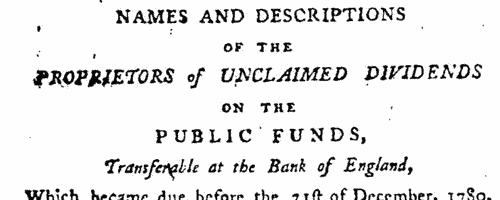
In Spring 1791 this list was issued, of the 'Names and Descriptions of the Proprietors of Unclaimed Dividends on the Public Funds Transferable at the Bank of England, Which became due before the 31st of December, 1780, and remained unpaid the 31st of December, 1790. With the Dates when the first Dividends respectively became payable, and the number of Dividends due thereon.' BUC. Cost: £6.00. | Sample scan, click to enlarge
| British in India and Ceylon
(1800)
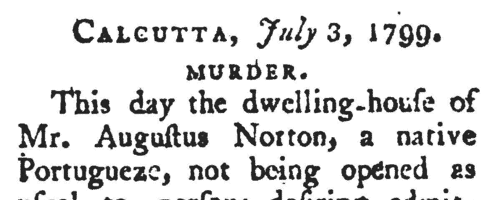
The Asiatic Annual Register 'or, a View of the History of Hindustan, and of the Politics, Commerce and Literature of Asia', to some extent modelled on the Annual Register itself, included an informative Chronicle section, in which are recorded births, marriages and deaths, civil and military promotions, in Bengal, Bombay and Madras presidencies and Ceylon. BUC. Cost: £6.00. | Sample scan, click to enlarge
|
| 1 | 2 |  |
Research your ancestry, family history, genealogy and one-name study by direct access to original records and archives indexed by surname.
|