Bourn Surname Ancestry ResultsOur indexes 1000-1999 include entries for the spelling 'bourn'. In the period you have requested, we have the following 262 records (displaying 1 to 10): Single Surname Subscription | | | Buying all 262 results of this search individually would cost £1,604.00. But you can have free access to all 262 records for a year, to view, to save and print, for £100. Save £1,504.00. More... |
These sample scans are from the original record. You will get scans of the full pages or articles where the surname you searched for has been found. Your web browser may prevent the sample windows from opening; in this case please change your browser settings to allow pop-up windows from this site. Clerks and Clergy in Worcestershire and southwest Warwickshire.
(1268-1301)
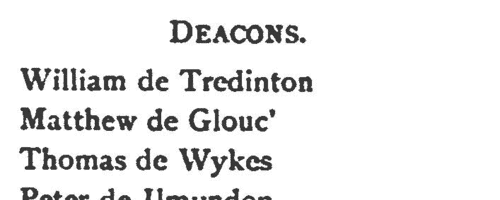
The register of bishop Godfrey Giffard of Worcester, containing general diocesan business, mostly relating to clergy, but with some parochial affairs and disputes with names of parishioners. The diocese of Worcester at this period was almost exactly coextensive with the county of Worcester (minus its western finger), plus southwest Warwickshire (including Warwick itself). The register also includes ordination lists (as in the sample scan) of subdeacons, deacons and priests.BOURN. Cost: £4.00.  | Sample scan, click to enlarge
| Close Rolls
(1313-1318)
The close rolls of the 7th, 8th, 9th, 10th and 11th years of the reign of king Edward II record the main artery of government administration in England, the orders sent out day by day to individual officers, especially sheriffs of shires: they are an exceptionally rich source for so early a period. In amongst this official material, the rolls were also used as a way of recording many acknowledgments of private debts and contracts between individuals. Most of the contents relate to England, but there are also entries concerning Wales, Scotland, Ireland and the English possessions in France.BOURN. Cost: £4.00. | Sample scan, click to enlarge
| Grantees of offices, commissions and pardons
(1317-1321)
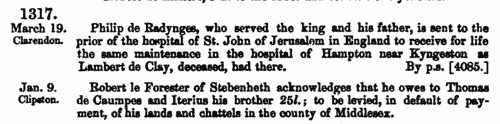
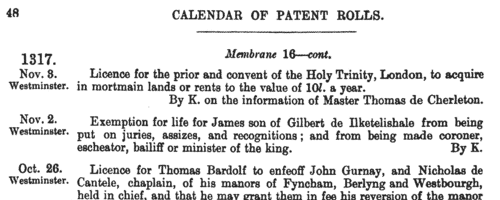
The Patent Rolls are the Chancery enrolments of royal letters patent. Those for the 11th to the 14th years of the reign of king Edward II (8 July 1317 to 7 July 1321) were edited for the Public Record Office by G. F. Handcock, and published in 1903. The main contents are royal commissions and grants; ratifications of ecclesiastical estates; writs of aid to royal servants and purveyors; and pardons. Most extensive are the commissions of oyer and terminer to justices to investigate complaints about specific crimes and wrongs in particular counties.BOURN. Cost: £2.00. | Sample scan, click to enlarge
| Chancery Warrants
(1244-1326)
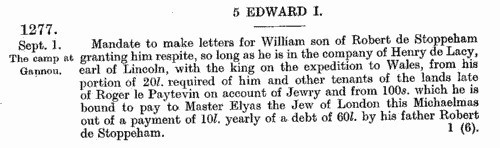
Warrants were issued by the kings of England to the royal chancery: most of these warrants led to further proceedings which are recorded on the Charter Rolls, Patent Rolls, Fine Rolls, Close Rolls or the Inquisitions: but archivists have identified a large number of warrants for which there are no such equivalent records, and those for the reigns of Edward I and Edward II are gathered here. Most of the entries relate to England and Wales, but with occasional items referring to Ireland and the English possessions in France.BOURN. Cost: £4.00. | Sample scan, click to enlarge
| Worcestershire Inhabitants
(1327)
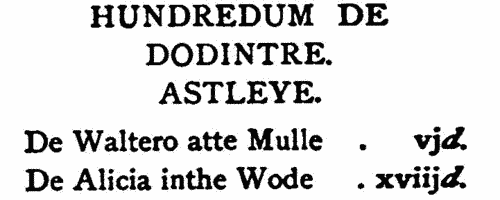
The Worcestershire Lay Subsidy roll of the 1st year of king Edward III lists lay inhabitants of each township of the shire and of the five boroughs of Droitwich (Wych), Dudley, Evesham, Kidderminster and Worcester, with the amount of tax payable by each. The roll was edited for the Worcestershire Historical Society by the Reverend F. J. Eld, and published in 1895.BOURN. Cost: £4.00. | Sample scan, click to enlarge
| Close Rolls
(1333-1337)
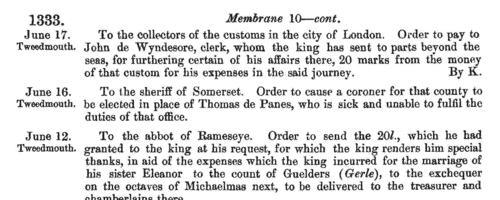
The close rolls of the 7th to 10th years of the reign of king Edward III, that is from 25 January 1333 to 24 January 1337, record the main artery of government administration in England, the orders sent out day by day to individual officers, especially sheriffs of shires: they are an exceptionally rich source for so early a period. In amongst this official material, the rolls were also used as a way of recording many acknowledgments of private debts and contracts between individuals. Most of the contents relate to England, but there are also entries concerning Wales, Scotland, Ireland and the English possessions in France: particularly Scotland, where the king was campaigning during this period. This calendar was prepared by A. B. Hinds of the Public Record Office and published in 1898.BOURN. Cost: £4.00. | Sample scan, click to enlarge
| Close Rolls
(1343-1346)
The close rolls of the 17th, 18th and 19th years of the reign of king Edward III record the main artery of government administration in England, the orders sent out day by day to individual officers, especially sheriffs of shires: they are an exceptionally rich source for so early a period. There is also some material relating to Wales, Scotland, Ireland and the English possessions in France.BOURN. Cost: £4.00. | Sample scan, click to enlarge

| Grantees of offices, commissions and pardons
(1350-1354)
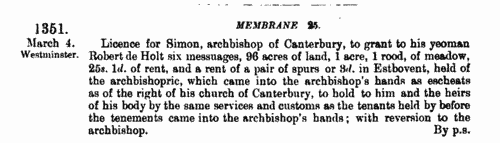
The Patent Rolls are the Chancery enrolments of royal letters patent. Those for the 24th to the 27th years of the reign of king Edward III (25 January 1350 to 24 January 1354) were edited for the Public Record Office by R. F. Isaacson, and published in 1907. The main contents are royal commissions and grants; ratifications of ecclesiastical estates; writs of aid to royal servants and purveyors; and pardons. BOURN. Cost: £2.00. | Sample scan, click to enlarge
| Clerks and Clergy in Somerset
(1329-1363)
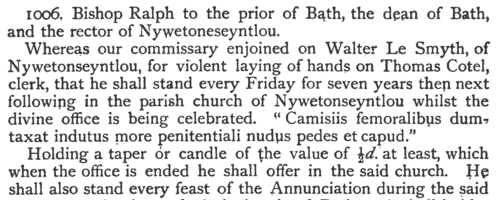
The register of bishop Ralph de Salopia or Shrewsbury of Bath and Wells, containing general diocesan business, mostly relating to clergy, but with some parochial affairs and disputes with names of parishioners. The diocese of Bath and Wells at this period was almost exactly coextensive with the county of Somerset. BOURN. Cost: £4.00. | Sample scan, click to enlarge
| London, Essex and Hertfordshire clerks, clerics, monks and clergy
(1361-1374)
Ordinations to first tonsure, acolytes, subdeacons, deacons and priests, from the register of bishop Simon de Sudbury of London. London diocese covered Middlesex, Essex and part of Hertfordshire; the ordinations also attracted many persons from distant dioceses bearing letters dimissory from their ordinaries, and these are duly noted in the text. Many of these clerks would not go on to obtain benefices and remain celibate. The lists of subdeacons, deacons and priests state the clerks' respective titles, i. e., give the names of the person or religious house undertaking to support them. Monks and friars ('religious') are listed separately, and the lists of subdeacons, deacons and priests are also separated into beneficed and not beneficed (or 'not promoted'). The acolyte lists are unusual in giving a parish or diocese of origin.BOURN. Cost: £6.00. | Sample scan, click to enlarge

|
Research your ancestry, family history, genealogy and one-name study by direct access to original records and archives indexed by surname.
|