Anglicus Surname Ancestry ResultsOur indexes 1000-1999 include entries for the spelling 'anglicus'. In the period you have requested, we have the following 27 records (displaying 1 to 10): Single Surname Subscription | | | Buying all 27 results of this search individually would cost £116.00. But you can have free access to all 27 records for a year, to view, to save and print, for £100. Save £16.00. More... |
These sample scans are from the original record. You will get scans of the full pages or articles where the surname you searched for has been found. Your web browser may prevent the sample windows from opening; in this case please change your browser settings to allow pop-up windows from this site. Grantees of royal lands and pardons
(1129-1130)
The Great Rolls of the Pipe are the central record of the crown compiling returns of income and expenditure from the sheriffs and farmers of the various English counties or shires. This is the oldest series of public records, and the earliest surviving instances of many surnames are found in the Pipe Rolls. This is the earliest surviving roll, believed to be from the 31st year of the reign of king Henry I, that is, accounting for the year from Michaelmas 1129 to Michaelmas 1130: this is a period for which there are no other general English records, so these rolls give details of many persons and incidents otherwise utterly unknown. Most (but not all) of the entries in which names appear relate to payments for grants of land and pardons. There is a separate return in each year for each shire, the name of the shire being here printed at the top of each page. Wales was still independent, in separate kingdoms, at this period, and is not included, except for 'Herefordshire in Wales'. There is virtually no reference to the palatinates of Chester, Lancaster and Durham, or to Cumberland and Westmoreland in the far northwest.ANGLICUS. Cost: £4.00.  | Sample scan, click to enlarge
| Grantees of royal lands and pardons
(1175-1176)
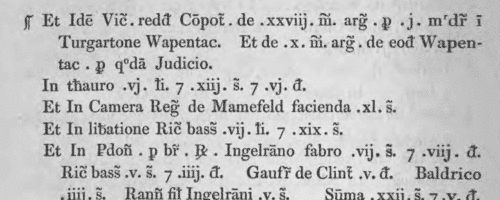
The Great Rolls of the Pipe are the central record of the crown compiling returns of income and expenditure from the sheriffs and farmers of the various English counties or shires. This is the oldest series of public records, and the earliest surviving instances of many surnames are found in the Pipe Rolls. This is the roll for the 22nd year of the reign of king Henry II, that is, accounting for the year from Michaelmas 1175 to Michaelmas 1176. Most (but not all) of the entries in which names appear relate to payments for grants of land and fines or pardons. The large number of payments of fines for forest transgressions has been interpreted as a form of compounding for pardons by those who had rebelled during the recent years of unrest; or, looking at it in a different way, a form of extortion from the king in order to raise money to pay off the mercenaries with whose help he had quelled the rebellions. There is a separate return in each year for each shire, the name of the shire being here printed at the top of each page. Wales was still independent, in separate kingdoms, at this period, and is not included, except for 'Herefordshire in Wales'. ANGLICUS. Cost: £4.00. | Sample scan, click to enlarge
| Grantees of royal lands and pardons
(1176-1177)
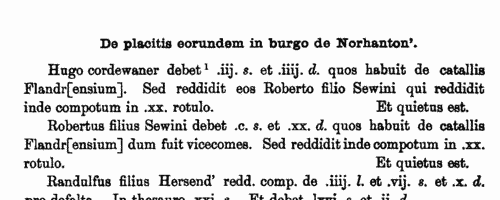
The Great Rolls of the Pipe are the central record of the crown compiling returns of income and expenditure from the sheriffs and farmers of the various English counties or shires. This is the oldest series of public records, and the earliest surviving instances of many surnames are found in the Pipe Rolls. This is the roll for the 23rd year of the reign of king Henry II, that is, accounting for the year from Michaelmas 1176 to Michaelmas 1177. Most (but not all) of the entries in which names appear relate to payments for grants of land and fines or pardons. The large number of payments of fines for forest transgressions has been interpreted as a form of compounding for pardons by those who had rebelled during the recent years of unrest. There is a separate return in each year for each shire, the name of the shire being here printed at the top of each page. Wales was still independent, in separate kingdoms, at this period, and is not included, except for 'Herefordshire in Wales'. ANGLICUS. Cost: £4.00. | Sample scan, click to enlarge
| Donzels, damsels and widows in eastern England
(1185)
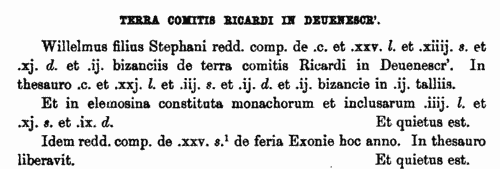
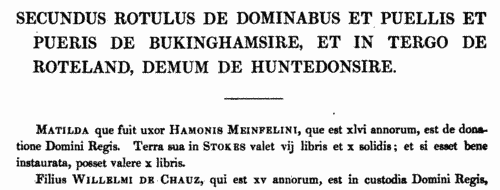
The Rotuli de Dominabus et Pueris et Puellis de Donatione Regis contain abstracts of inquisitions taken in the 31st year of king Henry II in Lincolnshire, Northamptonshire, Bedfordshire, Buckinghamshire, Rutland, Huntingdonshire, Norfolk, Suffolk, Hertfordshire, Essex, Cambridgeshire and Middlesex, taken by Hugh de Morewich, Ralph Murdac, William Vavassur and master Thomas de Hesseburn, justices in eyre, for the purpose of ascertaining the wardships, reliefs and other profits due to the king from widows and orphans of his tenants in capite (in chief); minutely describing their ages and heirship, their lands, the value of them, the beasts upon them, and the additional quantity necessary to complete the stock. The text of the rolls survived in a 17th-century copy, Harleian MS 624 in the British Museum, and this was edited and published by Stacey Grimaldi in 1830.ANGLICUS. Cost: £4.00. | Sample scan, click to enlarge
| Pipe Rolls: Berkshire
(1189-1190)
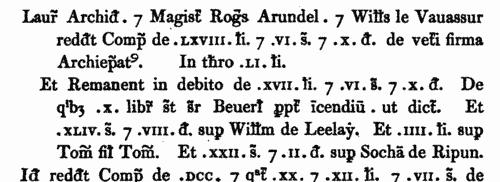
The Great Rolls of the Pipe contain returns of income and expenditure from the sheriffs and farmers of the various English sheriffdoms, counties or shires and from honors in the hands of the crown. This is the roll for the 1st year of the reign of king Richard I, that is, accounting for the year from Michaelmas 1189 to Michaelmas 1190. Many of the individual surnames that appear are in the accounts of fines &c. levied by justices.ANGLICUS. Cost: £4.00. | Sample scan, click to enlarge
| Pipe Rolls: Cambridgeshire
(1189-1190)
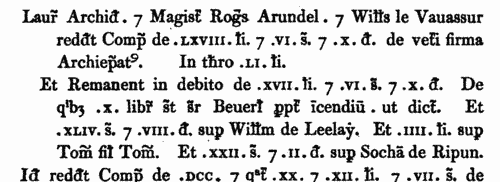
The Great Rolls of the Pipe contain returns of income and expenditure from the sheriffs and farmers of the various English sheriffdoms, counties or shires and from honors and bishoprics in the hands of the crown. This is the roll for the 1st year of the reign of king Richard I, that is, accounting for the year from Michaelmas 1189 to Michaelmas 1190. Many of the individual surnames that appear are in the accounts of fines &c. levied by justices.ANGLICUS. Cost: £4.00. | Sample scan, click to enlarge
| Curia Regis Rolls
(1194-1199)
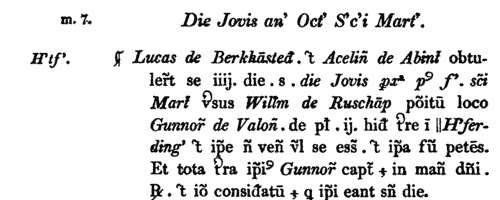
The Curia Regis, king's court, of mediaeval England took cases from throughout the country, and its records are among the most important surviving from this early period. This transcript of the rolls for October to December 1194 and October 1198 to July 1199 were edited by sir Francis Palgrave for the Commissioners of the Public Records. Most entries have the name of the county in the lefthand margin.ANGLICUS. Cost: £4.00. | Sample scan, click to enlarge
| Curia Regis Rolls
(1196-1201)
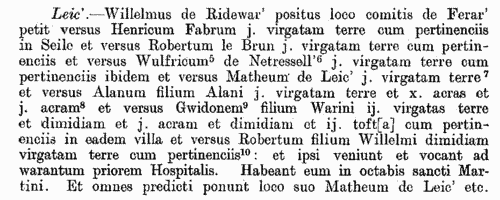
The Curia Regis, king's court, of mediaeval England took cases from throughout the country, and its records are among the most important surviving from this early period.ANGLICUS. Cost: £4.00. | Sample scan, click to enlarge
| Liberate Rolls
(1200-1211)
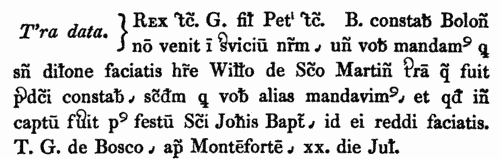
The chancery liberate rolls of the 2nd, 3rd and 5th years of the reign of king John (who came to the throne 27 May 1199) record the details of payments and allowances issued out of the Court of Chancery under the Great Seal of England, and were directed to the Treasurer. The rolls were edited by Thomas Duffus Hardy and printed by the Record Commission in 1844. Included in the volume is a transcript of a Praestita Roll (on which were entered the sums of money which issued out of the treasuries by way of imprest, advance or accommodation) of the 12th year of king John and a Misae Roll (detailing the daily expenses of his court) of the 11th year. Most of the entries relate to England and Wales, but there are occasional references to Ireland and the English possessions in France.ANGLICUS. Cost: £4.00. | Sample scan, click to enlarge
| Curia Regis Rolls
(1210-1212)
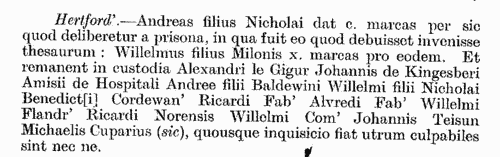
The Curia Regis, king's court, of mediaeval England took cases from throughout the country, and its records are among the most important surviving from this early period.ANGLICUS. Cost: £4.00. | Sample scan, click to enlarge
|
Research your ancestry, family history, genealogy and one-name study by direct access to original records and archives indexed by surname.
|