Addams Surname Ancestry ResultsOur indexes 1000-1999 include entries for the spelling 'addams'. In the period you have requested, we have the following 153 records (displaying 1 to 10): Single Surname Subscription | | | Buying all 153 results of this search individually would cost £864.00. But you can have free access to all 153 records for a year, to view, to save and print, for £100. Save £764.00. More... |
These sample scans are from the original record. You will get scans of the full pages or articles where the surname you searched for has been found. Your web browser may prevent the sample windows from opening; in this case please change your browser settings to allow pop-up windows from this site. Householders of Woodbury, Devon
(1536)
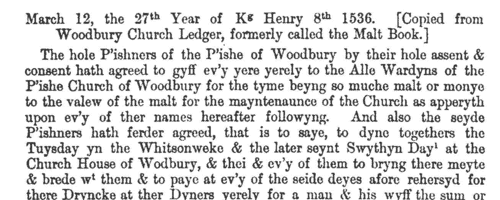
The Woodbury Church Ledger or Malt Book contained assessments of householders in the parish, arranged district by district, for the levy of the malt rate. This is the return for 12 March 1536.ADDAMS. Cost: £6.00.  | Sample scan, click to enlarge
| Militia in Carhampton hundred, Somerset
(1569)
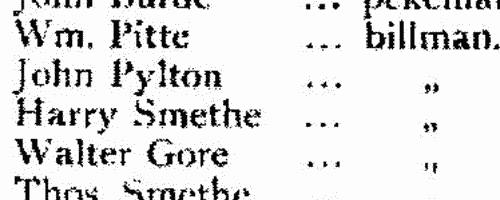
A muster of the ablemen, gunners, light horsemen, pikemen, archers and billmen available from this hundred, compiled by sir Hugh Paulet, sir Maurice Barkeley, sir Ralph Hopton and John Horner in answer to a royal commission of the 11th year of queen Elizabeth. The returns are arranged by tithing. The hundred consisted of the parishes of Carhampton, Culbone (Kilner), Cutcombe, (the market town of) Dunster, Exford, Luckham (Luccombe), Luxborough, (the seaport and market town of) Minehead, Oare, Porlock, Selworthy, Stoke Pero, Timberscombe, Treborough, Withycombe and Wootton Courtney. (The sample shown is from the return for the borough of Axbridge)ADDAMS. Cost: £6.00. | Sample scan, click to enlarge
| Militia in Chewton hundred, Somerset
(1569)
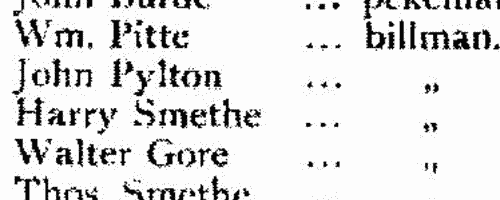
A muster of the ablemen, gunners, light horsemen, pikemen, archers and billmen available from this hundred, compiled by sir Hugh Paulet, sir Maurice Barkeley, sir Ralph Hopton and John Horner in answer to a royal commission of the 11th year of queen Elizabeth. The returns are arranged by tithing. The hundred consisted of the parishes of Brockley, Cameley, Chewton Mendip, Chilcompton, Compton Martin, Emborough, Farrington Gurney, High Littleton, Hinton Blewett, Kingston Seymour, Midsomer Norton, Paulton, Stone Easton, Ubley (Obleigh) and West Harptree, north of Wells. (The sample shown is from the return for the borough of Axbridge)ADDAMS. Cost: £6.00. | Sample scan, click to enlarge
| Militia in Martock hundred, Somerset
(1569)
A muster of the ablemen, gunners, light horsemen, pikemen, archers and billmen available from this hundred, compiled by sir Hugh Paulet, sir Maurice Barkeley, sir Ralph Hopton and John Horner in answer to a royal commission of the 11th year of queen Elizabeth. The returns are arranged by tithing. The hundred consisted of the parish of Martock. (The sample shown is from the return for the borough of Axbridge)ADDAMS. Cost: £6.00. | Sample scan, click to enlarge
| Militia in South Petherton hundred, Somerset
(1569)
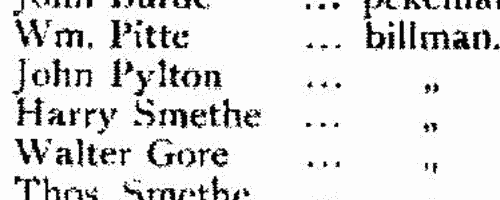
A muster of the ablemen, gunners, light horsemen, pikemen, archers and billmen available from this hundred, compiled by sir Hugh Paulet, sir Maurice Barkeley, sir Ralph Hopton and John Horner in answer to a royal commission of the 11th year of queen Elizabeth. The returns are arranged by tithing. The hundred consisted of the parishes of Barrington, Chaffcombe, Chillington, Cricket St Thomas, Cudworth, Dinnington, Dowlish Wake, Knowle St Giles, Lopen, Seavington St Mary, Seavington St Michael, Shepton Beauchamp, South Petherton and Whitestaunton, northwest of Chard. (The sample shown is from the return for the borough of Axbridge)ADDAMS. Cost: £6.00. | Sample scan, click to enlarge
| Militia in Wells Forum hundred, Somerset
(1569)
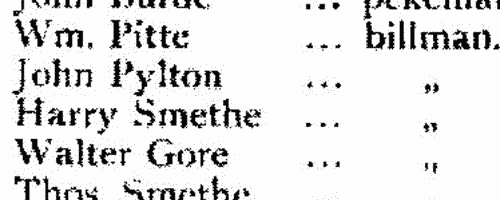
A muster of the ablemen, gunners, light horsemen, pikemen, archers and billmen available from this hundred, compiled by sir Hugh Paulet, sir Maurice Barkeley, sir Ralph Hopton and John Horner in answer to a royal commission of the 11th year of queen Elizabeth. The returns are arranged by tithing. The hundred consisted of the parishes of Binegar, Dinder, Evercreech, Litton, Priddy, (the city of) Wells, Westbury, West Cranmore and Wookey. (The sample shown is from the return for the borough of Axbridge)ADDAMS. Cost: £6.00. | Sample scan, click to enlarge
| Militia in Whitley hundred, Somerset
(1569)
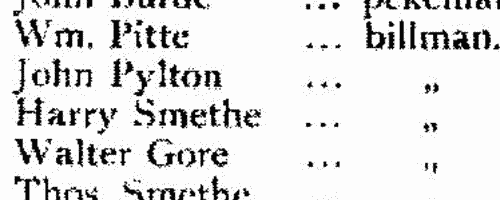
A muster of the ablemen, gunners, light horsemen, pikemen, archers and billmen available from this hundred, compiled by sir Hugh Paulet, sir Maurice Barkeley, sir Ralph Hopton and John Horner in answer to a royal commission of the 11th year of queen Elizabeth. The returns are arranged by tithing. The hundred consisted of the parishes of Ashcott, Blackford, Butleigh, Compton Dundon, Cossington, Gre(i)nton, High Ham, Holford, Holton, Middlezoy, Moorlinch, Othery, Milton Podimore, Shapwick, Street, Walton, West Monkton, Weston Zoyland, Wheathill and Woolavington, northeast of Bridgwater. (The sample shown is from the return for the borough of Axbridge)ADDAMS. Cost: £6.00. | Sample scan, click to enlarge
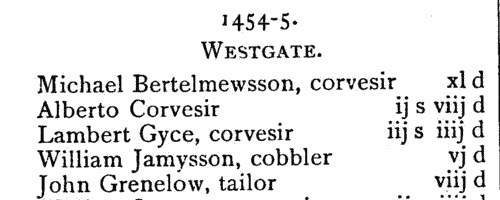
| Traders in Canterbury
(1392-1592)
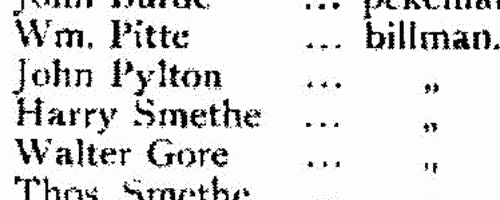
No man or woman could trade in the city of Canterbury without having obtained 'freedom' of the city, unless they paid an annual fee to do so. Admissions of freemen were recorded on the Chamberlains' Accounts of the city, which were prepared annually from Lady Day (25 March) to Lady Day until 1752, and thereafter each set runs from 1 January to 31 December. The accounts for 1392 are incomplete, but thereafter until 1800 there is a complete series except for the years 1455 to 1457 and the year 1552-3. Joseph Meadows Cowper, Honorary Librarian to the Corporation, transcribed and privately printed in 1904 the lists of the Intrantes - those persons, not being free of the city, who paid the annual fine to trade - for the period 1392 to 1592. The names are arranged by ward (Burgate, Newyngate, Westgate, Worgate and Northgate, and give full name, (sometimes) occupation, and fee paid. ADDAMS. Cost: £4.00. | Sample scan, click to enlarge
| Secretary of State's Papers
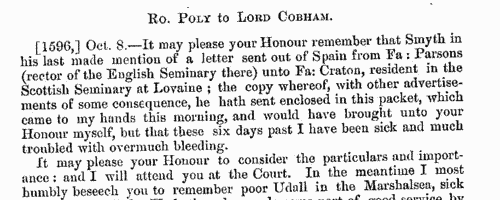
(1596)
The letters and papers of sir Robert Cecil, Secretary of State, deal with all manner of government business in England, Ireland and abroad.ADDAMS. Cost: £4.00. | Sample scan, click to enlarge
| Worcestershire Quarter Sessions
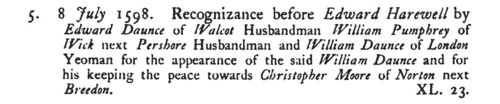
(1602)
J W Willis Bund compiled this abstract of surviving records from the Worcestershire quarter session rolls for the Records and Charities Committee of the Worcestershire County Council. This text, extending as far as 1621, was published in 1899: the entries are arranged by year under the headings Recognizances, Indictments, and Miscellaneous. ADDAMS. Cost: £4.00. | Sample scan, click to enlarge
|
Research your ancestry, family history, genealogy and one-name study by direct access to original records and archives indexed by surname.
|